
Generative AI, creative tools - 2023–2025
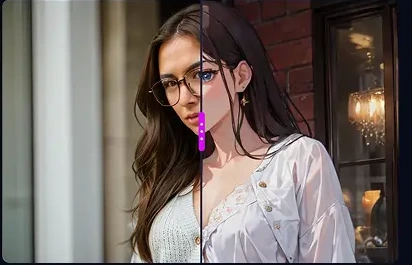
A web editor that wraps image generation, style transfer, face swapping and upscaling into one interface - built for the moment right after generation, when a result is close but not quite right.
The problem
The brief was to put professional-grade generative AI - GANs, diffusion models, transformer architectures, style transfer, face replacement - in front of people who'd never touched a machine-learning tool, without asking them to learn what any of those words mean.
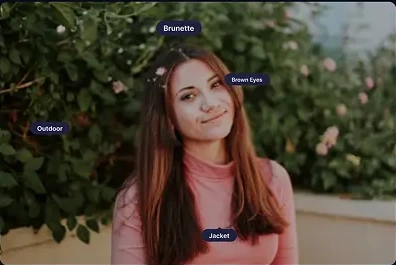
Getting from a text prompt to a plausible image turned out to be the smaller half of that. The harder problem sits one step later: a result that's close but not right, and an interface that has to let someone fix the jacket without losing the face, the light, or the three other things that already worked.
Approach
I worked alongside AI researchers and computer vision engineers who were integrating the generative, style-transfer and face-replacement models, while I focused on the layer wrapped around them - the part a photographer or a small studio actually touches. Inference ran on cloud GPU infrastructure, with in-house optimisation to keep the compute cost of every generation and every edit under control.
One prompt gets you a draft. Everything after that is editing.
Editing controls
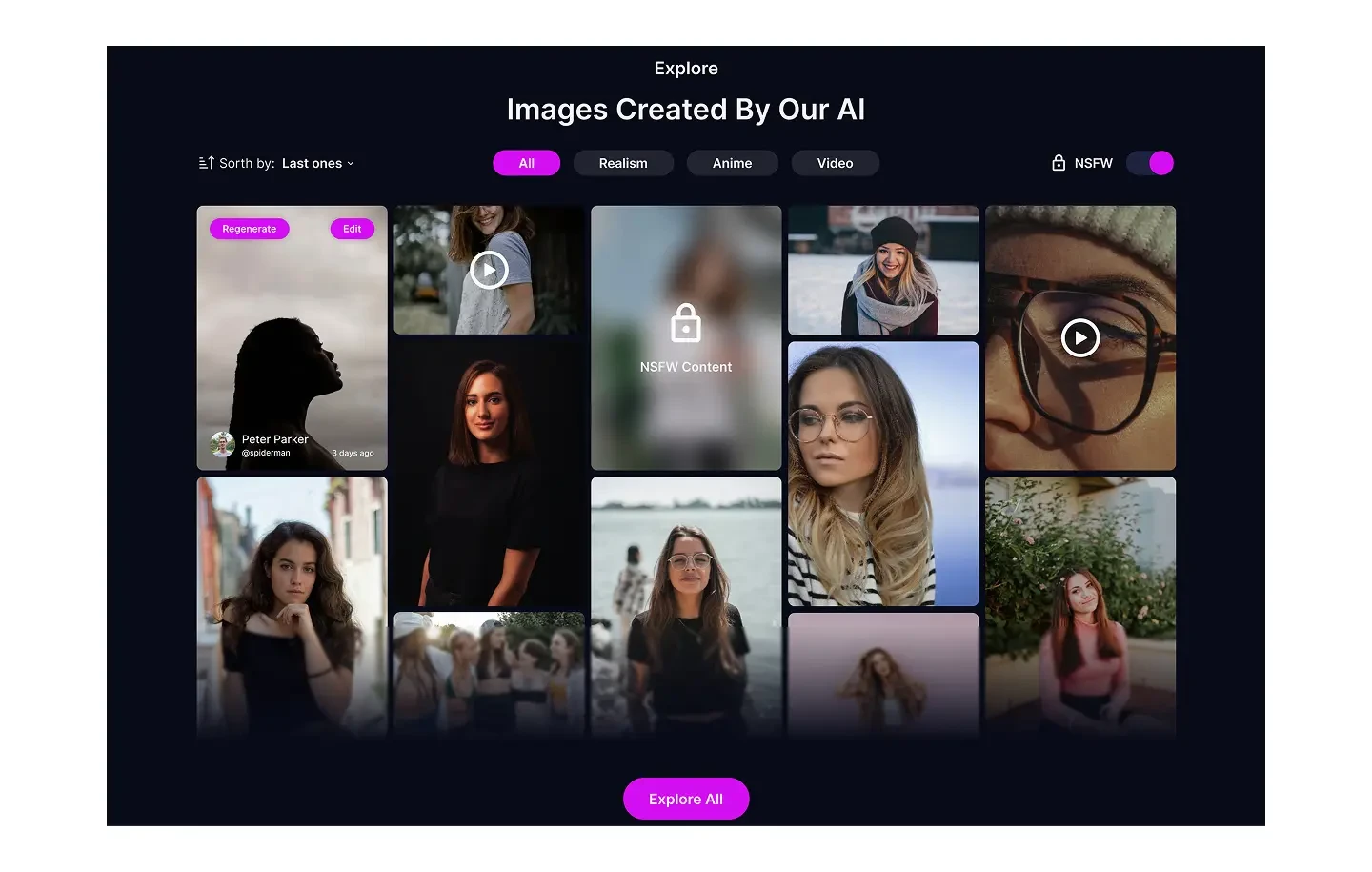
Negative Prompt lets someone say what to avoid - "don't make it darker" - instead of only what to add. Mask Select scopes an edit to one region of the photo instead of the whole frame. Image Upscaling raises resolution for print or commercial use without softening detail. A Changing History sits underneath all of it, so a face swap, a style pass and an upscale can each be undone or revisited on their own, without redoing the steps that already landed.
Process
Studied generative model architectures - GANs, diffusion models, transformers - and how people actually work inside creative tools.
Mapped generation, attribute tagging, style transfer, masking and upscaling into one interface a non-technical creative could use.
Integrated the AI models with the research team, running inference on cloud GPU infrastructure with cost-control optimisation built in-house.
Delivered generation, editing and a persistent change history as one product, not a set of separate tools.
Design decisions
Split a generated look into separate tags instead of one description.
A single sentence of description means changing the jacket means rewriting the sentence and re-rolling everything around it. Tags - Brunette, Brown Eyes, Outdoor, Jacket - let one attribute change without touching the rest.
Put Regenerate and Edit on every result, not just a download button.
An AI image is rarely right on the first pass. The moment that decides whether someone keeps using the tool isn't generation - it's what happens to a result that's close but not quite there.
Made the change history span the whole pipeline, not one tool at a time.
A single image can pass through generation, a style pass, a face swap, a mask edit and an upscale. If history only covered one of those steps, backing out of a bad edit meant losing track of what stage actually broke the result.
Outcome
What shipped bundles generation, style transfer, face replacement, masked editing and upscaling into one web interface that needs no technical background to use, while still giving someone who wants it fine control over what changes and what doesn't.
Output resolution is high enough for print and commercial use, produced on GPU infrastructure built to run in real time rather than a render queue.