Luxury jewelry, AI e-commerce - 2023–2025
A customer describes a ring, pendant, or bracelet in plain language, and an AI engine trained on thousands of jewelry designs returns a photoreal concept in seconds.
The problem
The brief was an AI engine that turns a customer's description into a photoreal jewelry concept. But a chat-style generator wasn't actually what a jewelry brand runs on: it needed a business account with team access, subscription billing, and client requests that move from a first conversation to a finished piece. Before any screen got designed, we mapped that whole path - market research into luxury jewelry buying, then discovery workshops on the emotional side of commissioning a custom piece.
Running the business
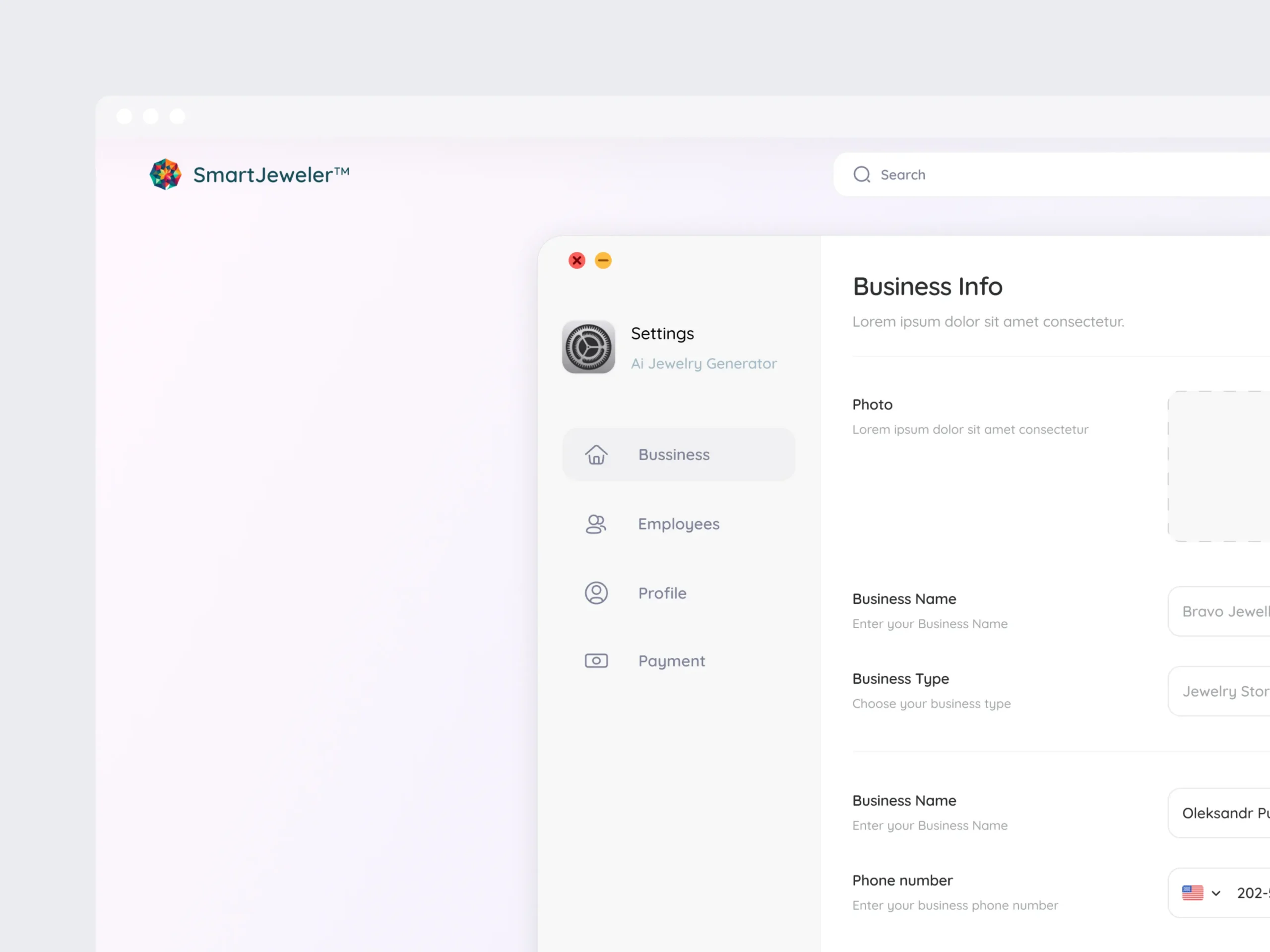
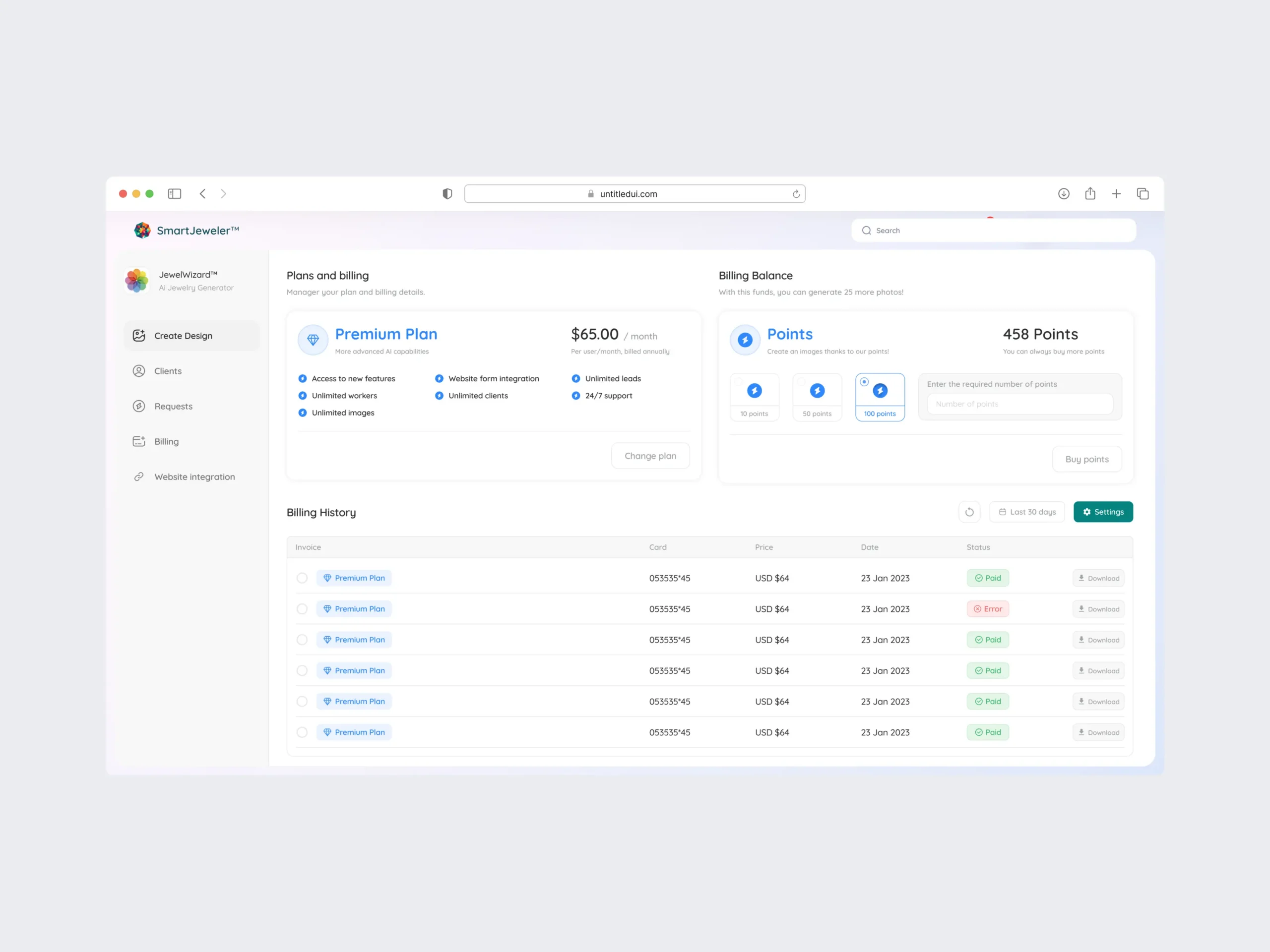
Every AI feature sits on top of ordinary SaaS plumbing, and that had to feel as considered as the generator itself: a business profile the account owner fills in once, and a billing screen that tracks the plan and the "points" balance that pays for each generation.
Approach
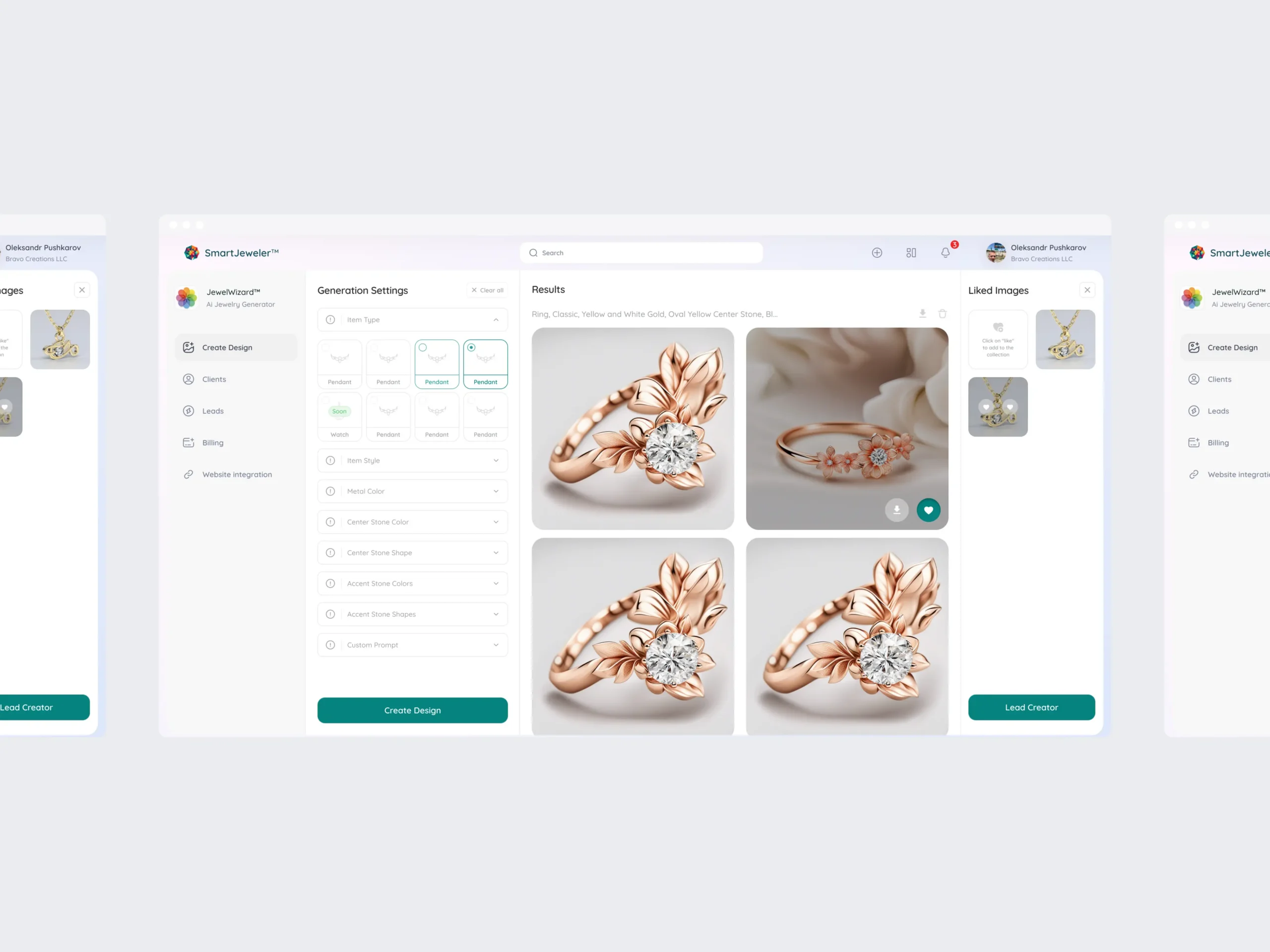
The generator runs on a structured settings panel instead of a text field: item type, metal color, center stone shape and color, accent stones - each one a dropdown built from real jewelry vocabulary. Every combination stays inside what the brand can actually produce, and a request returns four photoreal concepts rather than an open-ended scroll of variations.
Describe the piece in a jeweler's vocabulary, not a prompt.
Client pipeline
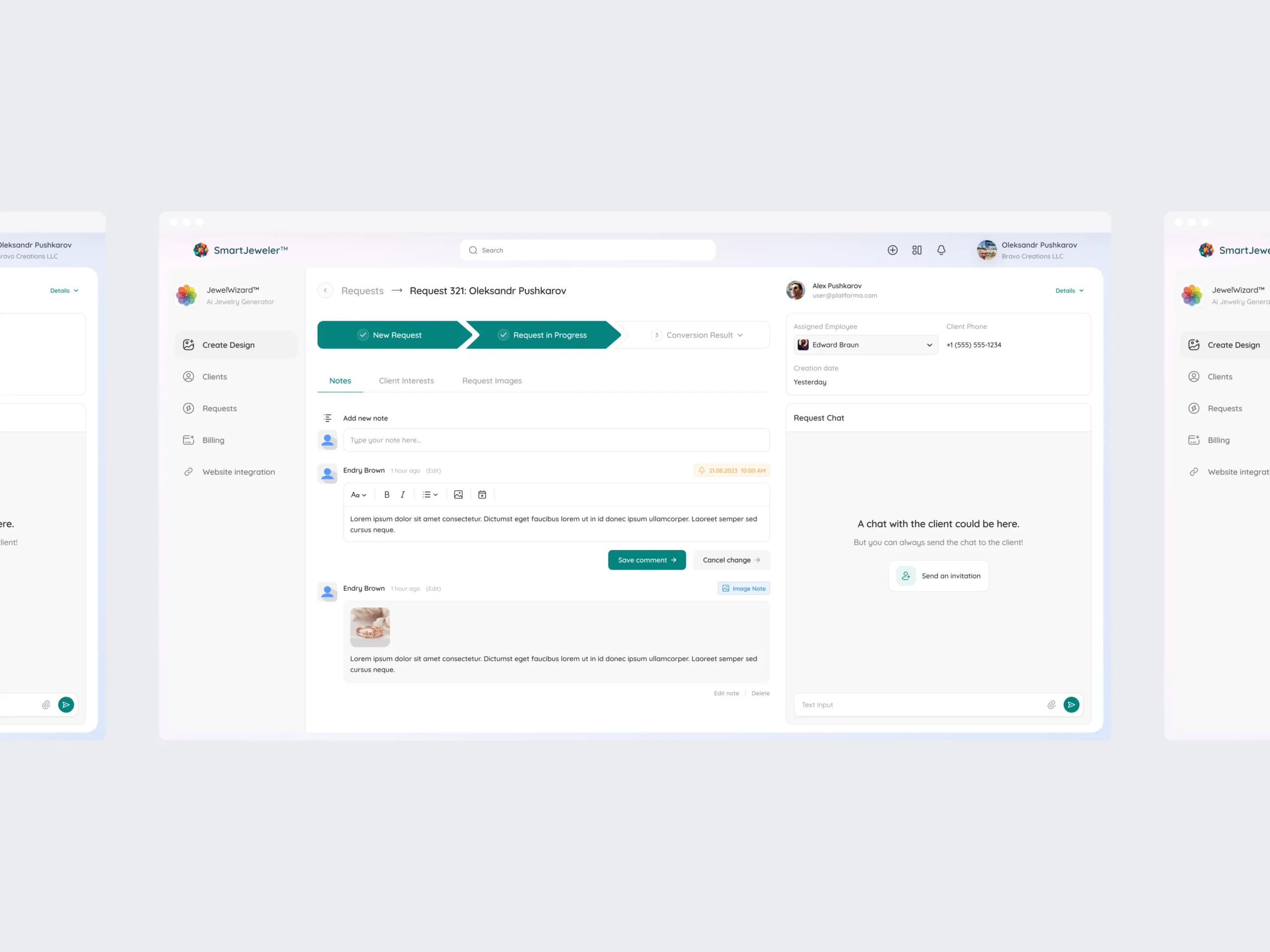
Every generated design can turn into a request that moves through three stages: New Request, Request in Progress, Conversion Result. A request carries the client's contact details, an assigned salesperson, notes, and a chat thread, so a photoreal concept doesn't dead-end as a download - it becomes the next step in an actual sales conversation.
Process
Studied luxury jewelry buying behavior and existing AI design tools before designing anything.
Mapped the emotional side of commissioning custom jewelry, not just the transactional steps.
Trained the AI model on thousands of jewelry designs so results stay within real materials and forms.
AI specialists, UX/UI designers, and full-stack developers shipped the platform sprint by sprint.
Design decisions
Swapped the prompt box for a parametric form.
A free-text field invites off-brand results - the wrong stone, a shape the brand can't cut. Dropdowns for item type, metal, and stone keep every output inside what's actually makeable.
Routed every concept into a request pipeline instead of a download button.
Commissioning jewelry is a relationship, not a checkout. A concept that lands in a pipeline with an assigned salesperson attached keeps the human part of the sale intact instead of turning it into a vending machine.
Kept the palette to soft neutrals and gold, with the jewelry doing the talking.
Generative tools tend to look technical - grids, sliders, debug panels. Large visuals, minimal chrome, and a restrained color system make the AI read as part of an atelier's toolkit rather than a tech demo bolted onto a jewelry brand.
Outcome
SmartJewerel shipped as one platform: an AI engine that turns a description into four photoreal concepts, plus the client, billing, and request tools a jewelry business runs on day to day. Thirty-plus screens went from research to shipped product over the engagement.