GovTech / Automotive & Mobility - 2023–2025
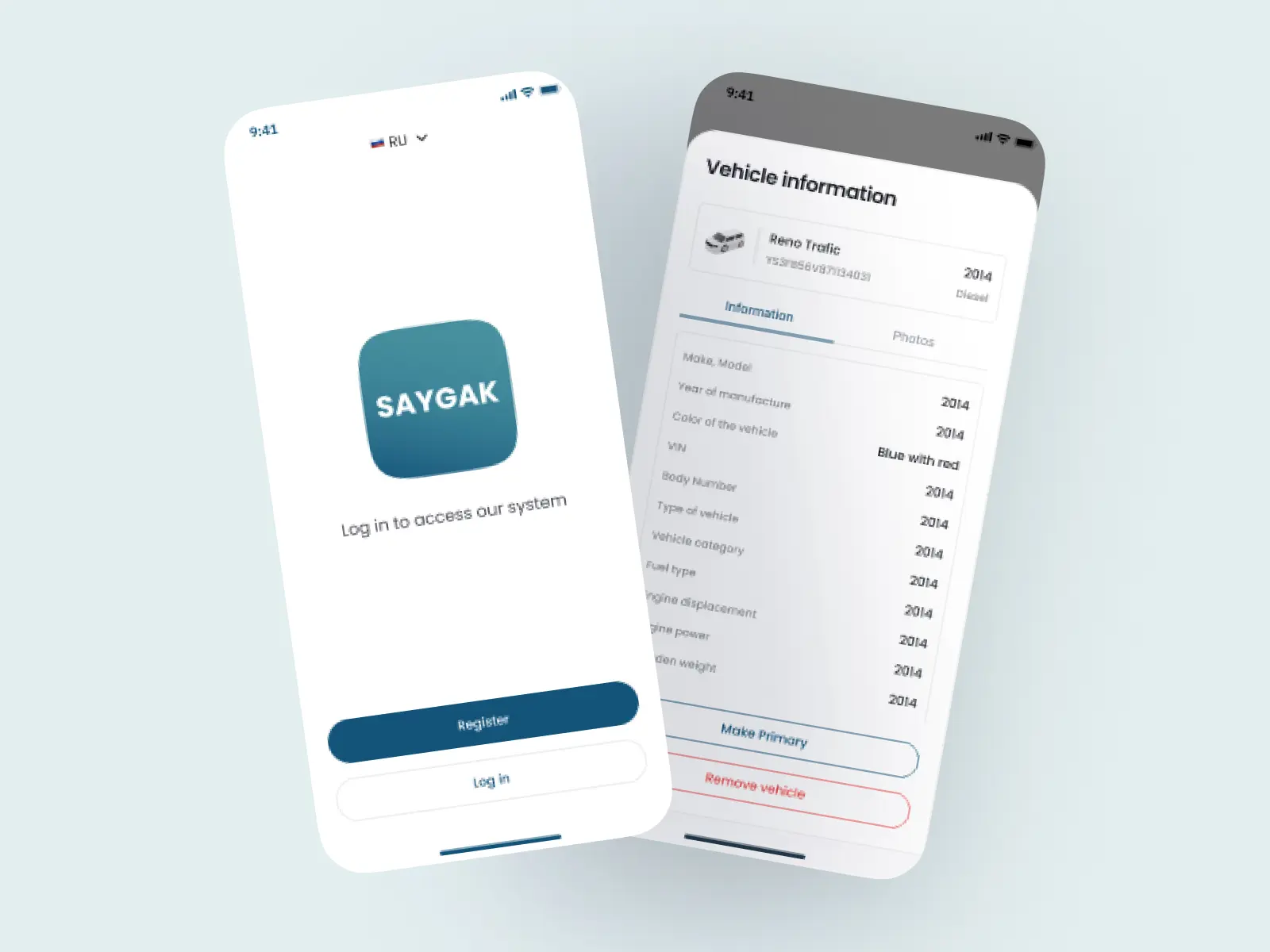
A mobile app that turns the vehicle queue at Kyrgyzstan's border crossings into a numbered ticket, a countdown and a QR code, instead of a line of cars and no information.
The problem
Drivers crossing into Kyrgyzstan waited in a physical line with no visibility into how long the wait actually was or how fair their place in it was. Every vehicle, driver and document still had to be checked in person, at the checkpoint, under whatever conditions the day brought.
The brief was to move that whole process - registration, vehicle documents, payment, queue slot - onto a phone, for people who would often be using it standing outside, in traffic, with a weak signal and somewhere to be.
Identity & registration
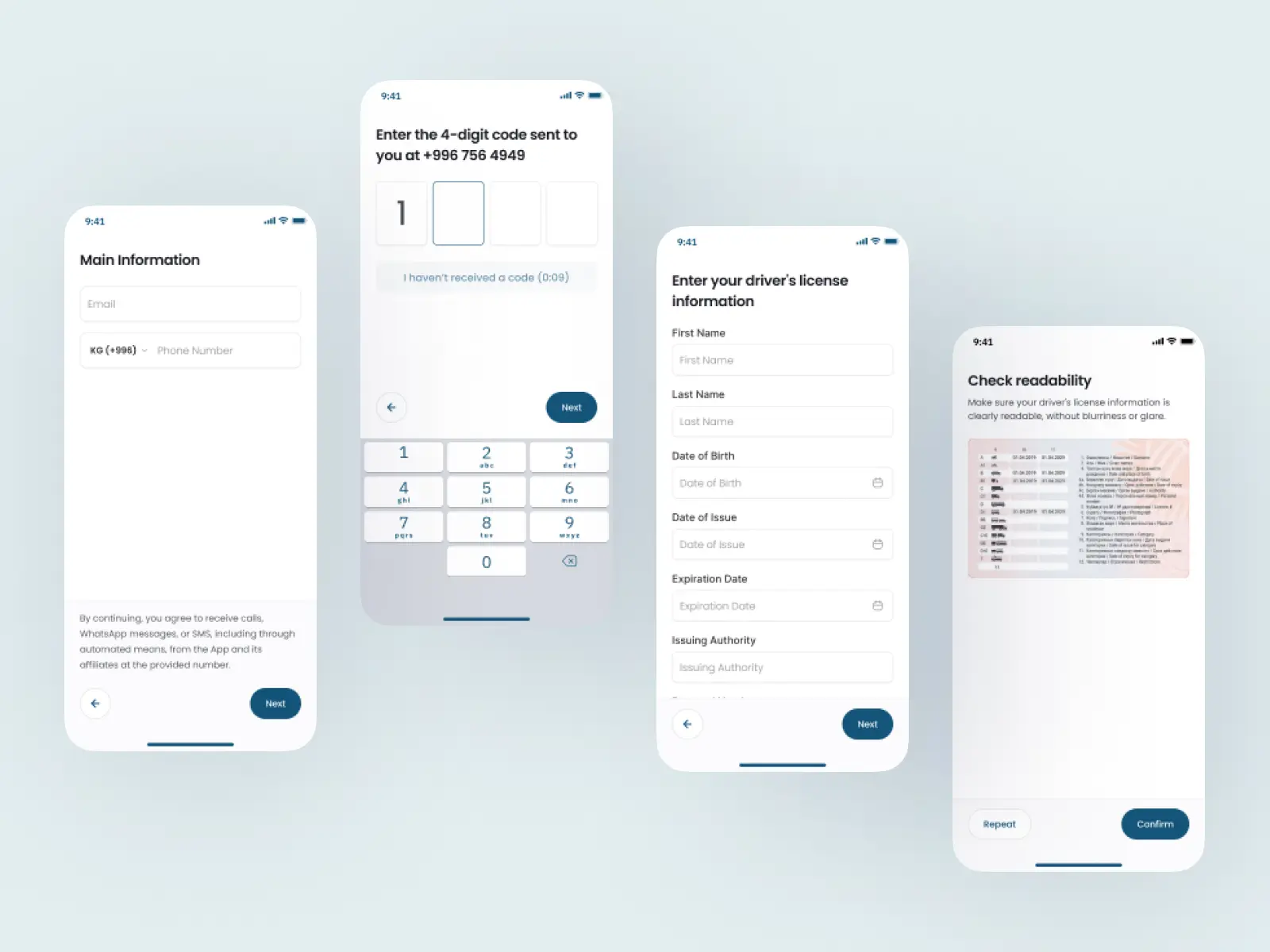
Sign-up starts with an email and phone number, confirmed with a 4-digit SMS code. From there the driver enters driver's-license details - name, date of birth, date of issue, expiration date, issuing authority - and photographs the license itself. Before that photo is accepted, the app checks it for blur and glare and asks the driver to retake it on the spot if it's unreadable, rather than flagging it after the fact.
Vehicle & documents
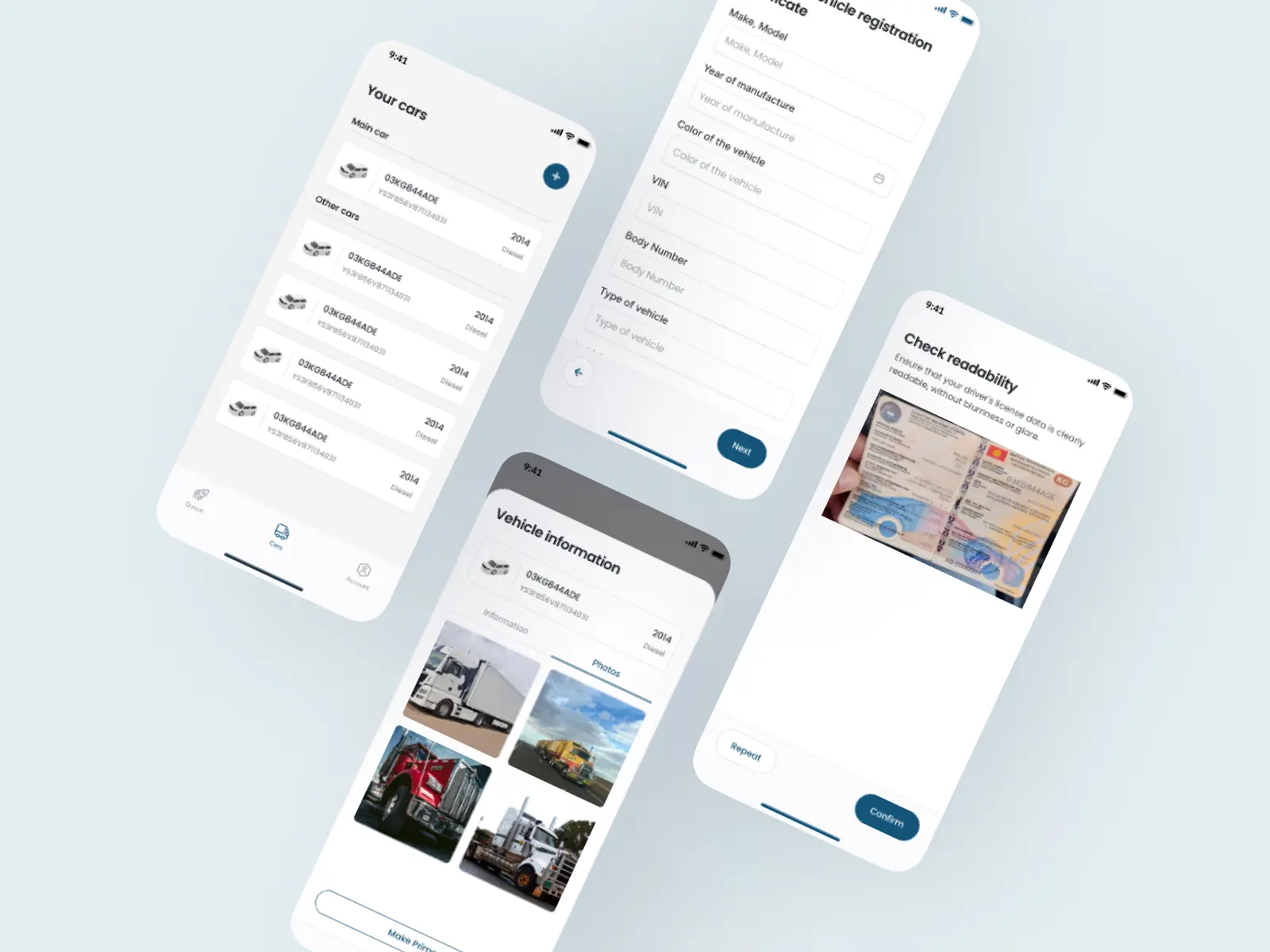
Adding a vehicle means filling in its registration certificate - make, model, year, colour, VIN, body number, vehicle type - then photographing the vehicle itself from multiple angles for the record. Every saved vehicle shows in a list with its plate and year, one marked as the primary vehicle, and each can be removed. The same document readability check used for the driver's license runs here too, so an unreadable certificate gets caught before it's submitted.
Approach
We started with research into how border crossings and government queue systems actually worked in Kyrgyzstan, then built a mobile-first flow around it: neutral tones, readable type, and large tap areas that hold up outdoors and in low visibility. Working in an agile process alongside the mobile developers, I designed the document-verification steps, the real-time queue tracking, and the Russian and Kyrgyz forms side by side with the engineering of them.
A ticket you can trust because leaving it costs you.
The queue
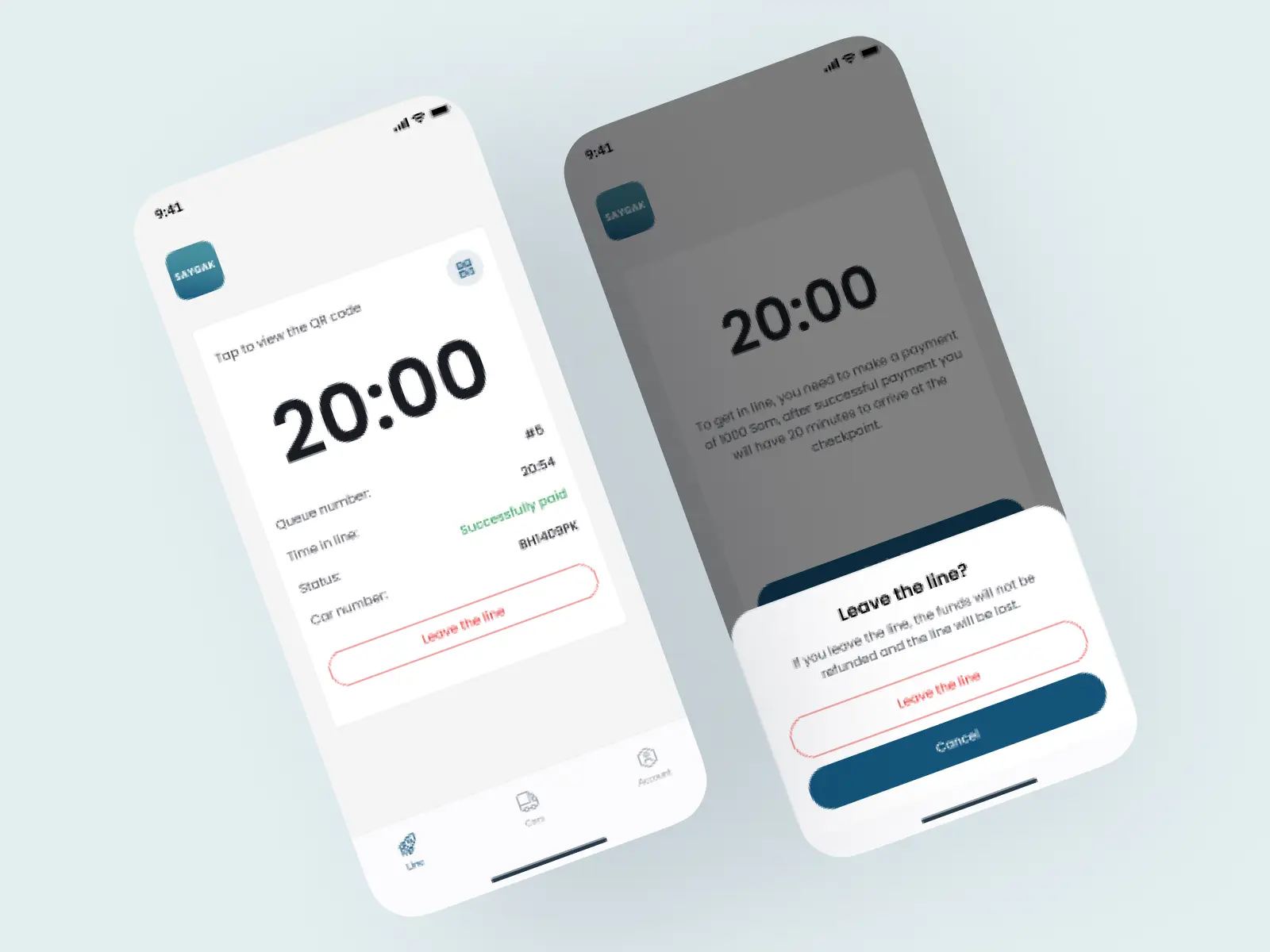
Once a driver and vehicle are verified, joining the queue costs a prepaid, non-refundable fee of 1000 Kyrgyz Som. In return, the app assigns a queue number, shows the current wait, and generates a QR code the driver taps to reveal at the checkpoint. A 20-minute countdown starts once it's the driver's turn, giving a fixed window to reach the gate. Leaving the line early is possible, but the app is explicit about the cost: the payment is not refunded, which is what keeps a place in line worth holding.
Process
Studied government border-crossing procedures and existing queue-management pain points in Kyrgyzstan.
Built the mobile-first, utilitarian visual system around outdoor readability and large tap targets.
Worked agile with the mobile team on document verification, live queue tracking and RU/KY localization.
Delivered registration, payment, virtual queue and QR checkpoint identification as one flow.
Design decisions
Built the visual system for outdoor legibility, not screen aesthetics.
The app gets used at a checkpoint, in daylight glare, by a driver who has been waiting and, on the other side of the glass, by an official checking a screen. Neutral tones, high-contrast type and large tap areas mattered more than a refined palette.
Put the document-quality check at the moment of capture, not after submission.
A blurry license photo caught later means restarting a step from a queue you're still standing in. A prompt to check the document isn't blurry sits right at the camera step, while the driver can still retake it.
Made leaving the queue forfeit the driver's non-refundable fee.
A queue only stays fair if a slot means something. Tying a real cost to leaving discourages people from holding a place they don't intend to use.
Outcome
Saygak replaced blind, in-person waiting with a system a driver can check from the driver's seat: queue position, live wait time, vehicle status and a QR code, all in one dashboard. Registration, document verification, payment and the queue itself now run as a single mobile flow instead of a line of cars at a government checkpoint.